
Press "Enter" to skip to content

Local family to thank community in welcome-home celebration

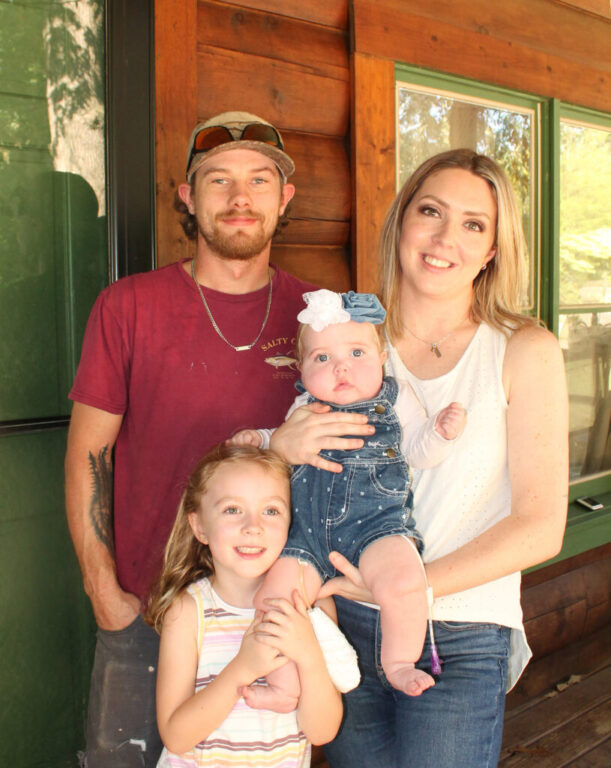
Mathews native Taylor Jacobs and her family, including infant daughter Waverly, are back home in Gloucester after living in the Ronald McDonald House in Philadelphia for eight months, and they’re ready to show their appreciation to all of the local individuals and organizations that helped them through tough times.

A welcome home celebration for Waverly and a thank-you to the community will be held from 11 a.m. to 3 p.m. on Saturday, Sept. 14, at the Piankatank Community League at 11888 Harcum Road in Gloucester.

The food will be catered free of charge by Buz and Ned’s Real Barbecue in Richmond, which is owned by friends of Waverly’s dad, Dilan Cotman. It will include barbecued pork and chicken sandwiches, along with sides and drinks.

“We don’t need an exact head count, but we’d like to let the caterer know whether to make enough food for 100 or 500,” said Jacobs with a laugh.

Cotman said that the local community has done so much for his family. Money collected locally purchased food and transportation for him and for other family members as they traveled back and forth from Gloucester and Mathews to Philadelphia to provide support for Jacobs and her daughter Audrey, both before Waverly was born and while Waverly was in treatment after birth for complications arising from Congenital Diaphragmatic Hernia. It paid for other things, as well.

“It allowed Audrey and I to have a life outside of the hospital room or Ronald McDonald,” said Jacobs. “It was used for school and for activities to try to make life normal for her.”

Jacobs tried to remember all the ways that people had reached out to help her family, from a yard sale at Mathews Baptist Church to a dinner at Howard-Dooley Café. A fundraiser at Damon & Company, a bowfishing tournament, cards with money and gifts, and more all helped ease the burden on the young family.

Jacobs emphasized that the family doesn’t want people to bring donations or gifts to this community party.

“We’ve already received so much,” she said. “We really just want to say thank you to the places, the churches, and the people, some we don’t even know.”

To let the family know who’s attending, search for “Welcome home, Waverly! Thank You, Community” under Facebook Events.

About Waverly’s condition

Waverly was diagnosed with Congenital Diaphragmatic Hernia last August, during Jacobs’ 20-week ultrasound. The life-threatening birth defect is a hole in the baby’s diaphragm, the muscle that separates the chest cavity from the abdominal cavity and assists with breathing.

Because of the hole, Waverly’s stomach, small intestine, spleen, and part of her liver moved into her chest cavity, collapsing her left lung and pushing her heart toward the right side of her chest. This interfered with her lung development, so surgery was performed on her while she was still in the womb to insert a balloon in her trachea, blocking the airway and causing fluid to build up in the lungs and enhance their growth.

The procedure, which was performed last November, helped, but not as much as needed, so when she was born in January, Waverly had to be put on an Ecmo machine for two weeks to circulate her blood through an artificial lung. She was also placed on an oscillator, which is a type of ventilator, and didn’t breathe on her own until she was two months old.

Another complication arose. Because her abdominal organs were in her chest, Waverly’s stomach distended out of shape, her liver grew too big, and she developed a hernia in her esophagus that her stomach pushes through. The result is that she can’t eat anything by mouth and has to be fed 20 hours a day through a gastrojejunal feeding tube. Yet another tube inserted into her abdomen drains fluids from her stomach. In addition, being on so much equipment gave her tracheomalacia, a condition that causes her airway to collapse when she breathes.

Jacobs and Cotman aren’t dwelling on those things, though. Having the surgery before birth increased Waverly’s chances of survival from 10 percent to 70 percent. On top of that, Medicaid kicked in and is taking care of Waverly’s medical treatment, which continues through the Medical College of Virginia, with less-frequent appointments at the Children’s Hospital of Philadelphia.

“I was going to make a payment plan and pay for the rest of my life,” said Cotman. “But Medicaid took care of it all.”

Jacobs said she’s filled with gratitude for people she’s known her whole life but wasn’t that close to as well as perfect strangers “who were there for me in a way I can never repay them for.” And she’s grateful that Waverly is a happy, easy baby.

“If she didn’t have all her medical stuff, we wouldn’t know she was in the room,” she said. “We don’t know what the future holds. We’re just enjoying the baby.”