
Press "Enter" to skip to content

AVFR celebrates 75th anniversary

This Sunday, May 18, Abingdon Volunteer Fire and Rescue will celebrate 75 years of service. To thank the community for all of its support over the years, AVFR will be hosting an open house celebration at Station 2 from 2 to 4 p.m. Sunday. The community is welcome and encouraged to come out to help celebrate.

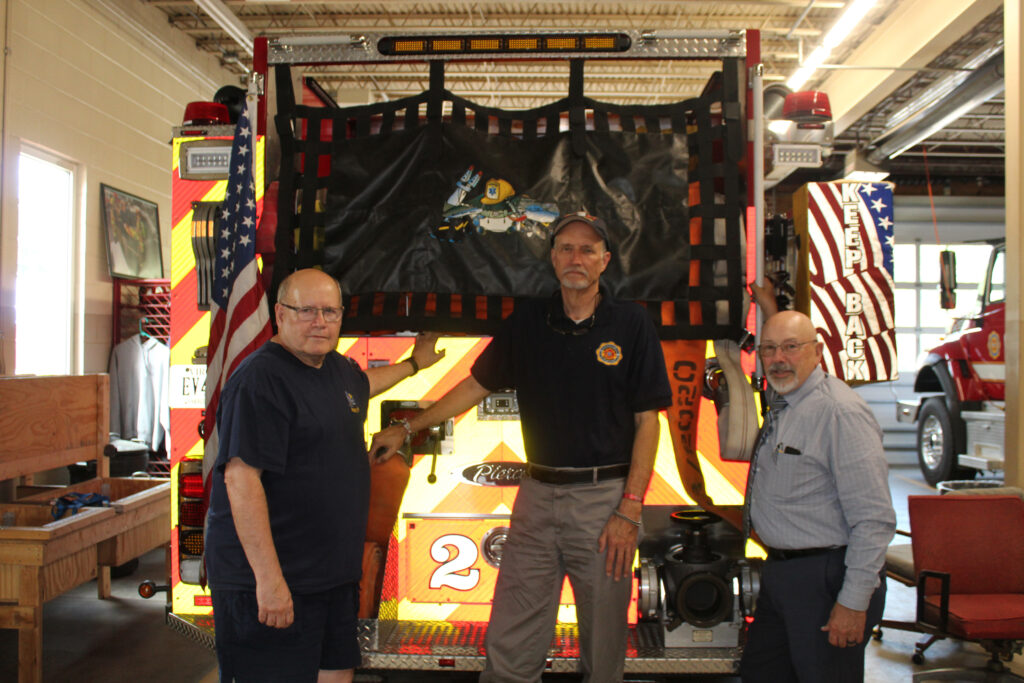
In honor of 75 years, three of AVFR’s members—Gordon Williams, a former Fire President, Jack Whitmore, a former Fire Vice President, and current Fire Vice President Alec Parlett—sat down to reminisce on the rich history of AVFR.

Right after WWII, Williams explained, there was no fire department in the immediate area; some of the men that had returned from WWII saw the need and started taking up a collection to purchase a fire truck. It took several years, but a vehicle was purchased in 1952, a Studebaker with an added pump and water tank, kept in an old wooden garage that it just barely fit into.

According to AVFR records, the organization’s first meeting was held on May 13, 1950, before the truck was even purchased, said Whitmore. There were 18 charter members of the Abingdon Volunteer Fire Company, including C.B. Rowe Jr., the first fire chief, and George R. Hayes, the first Fire President, recalled Parlett.

Before radios became more readily available, the fire company utilized a call tree, said Williams. It started with the sounding of the siren, a long sound for brush fires and a wavy one for structure fires. From there, the wives of the firemen would go down the list, calling the other houses until enough firemen responded.

The call tree was still utilized in 1979 when Whitmore joined, as well as a blackboard out front that announced the location of the fire. If you weren’t sure where the place on the board was, added Williams, you’d just look for the smoke. Another trick, Parlett included, was to look for the water trail from Engine 3, a pumper truck, as it leaked water so badly, it would make a turn and water would splash out. Unless it was cold outside, Whitmore joked, then you’d be sliding along a trail of ice.

When Parlett joined the company in 1978, he explained there was only one station, now Station 2, with three bays that housed the three fire engines. There were only three fire packs and spare bottles as well, he added, and once you went through that, you were stuck breathing in the smoke-filled air from a fire. Williams recalled many times during house fires where the entire time he was breathing smoke.

Along with the packs, the truck only stored three sets of gear, kept on the sides, said Williams. They grabbed the gear that was available, hoped it fit, and prepared for the possibility of slipping around in the boots, or cramming their feet into ones that were far too small.

Below the original part of Station 2 sit two water tanks, one in the front and one in the back, explained Parlett, with pipes at the front that allowed the engines to pull water. In the past, with the only water access at the Gloucester Point Shopping Center, it was crucial to have water on the trucks, said Whitmore. Williams recalled times they would have to draft into marshes, using salt water or brackish water to fight fires. “We have drafted out of the ditch in Guinea,” Whitmore said. Now, the district has more hydrants that can be accessed when needed.

Members would fight to get here as early as they could once the tone went out, Williams explained, because if they got to the station early enough, first or second, it would guarantee a seat inside the engine, otherwise, you were jumping on the tail of the truck as it was pulling out. If there were two people on the tailboard, Parlett added, one would box the other person in while they got dressed in gear—and vice versa.

Williams credited the Ladies Auxiliary who would keep the firefighters in water, Gatorade, hot dogs, and everything else on long calls. An old ambulance was converted into a portable canteen and they would go to wherever the firemen were and ensure they were taken care of.

“When you became a fireman, you became part of a family,” said Williams. “And your family became part of ours,” added Parlett.

It was in 2000 that the fire company merged with the rescue squad, Whitmore said. Before, the two had been separate agencies, but with higher call volumes, both squads needed the help, and there were volunteers who were members of both organizations already.

For fires, Parlett explained, the response time to Gloucester Point was not fast enough, but through merging fire and rescue, and the addition of a fire engine to Station 3, response times became much faster. “We’re always looking at where our needs are and how we can adjust and what we can do to make sure we’re serving the county,” he said.

Though many volunteer fire and rescue departments have been experiencing a lack in volunteers, Whitmore explained that AVFR has the opposite problem with more people than they can buy gear for. He credited those in charge of recruiting going to the high school and events in the county to set up information booths. “I think one thing that really energized our membership was when we got the boat,” he said, earning some chuckles.

“One of the things we try to teach to everybody here, when somebody shows up who’s new, make them feel welcome,” said Parlett. “Make them feel welcome and they’ll want to come back.”