
Press "Enter" to skip to content

Mathews gardening group promotes native plants

Mathews and Gloucester counties have a rich history when it comes to native Virginia plants.

Many drive by the mile marker plaque on John Clayton Highway/Route 14 at Windsor Road without thinking about the significant contributions of the famous botanist honored on it.

John Clayton left a legendary treasure trove of native plant discoveries here on the Middle Peninsula. Clayton (1694-1773) was an avid botanist who discovered and classified more than 800 native plants in Virginia. Known for the accurate detail of his plant descriptions, Clayton began compiling his own native specimens during the mid-1750s and in 1758 his work formed the basis of the widely published book, “Flora Virginica.”

In light of that history and the growing interest in using Virginia native plants in gardens, a group met last Wednesday. Those members of the Mathews Community Gardening Group, “Planters with a Purpose, welcomed as host Dr. Chris Catanzaro, an accomplished horticultural scientist and educator from Richmond.

Catanzaro’s presentation featured the distinction between native and invasive plant materials including examples of grasses, ferns, groundcovers, herbaceous perennials, vines, shrubs and trees.

“Before colonists and others landed on our soil, insects and native plants co-evolved over time and were mutually beneficial without competition from invasive species eventually integrated into the landscape as human population and travel increased. Native plants provide essential pollen, nectar, fruits, seeds, and leaves in our landscape,” noted Catanzaro. “These plants provide year-round interest, beauty, and biodiversity.”

As an example of invasive versus native specimens, Japanese honeysuckle is a common ornamental vine that has invaded roadsides, forests and fields across the Tidewater region. This invasive vine can girdle and kill small saplings and form dense mats in tree canopies—shading out native vegetation. A native alternative is the coral or trumpet honeysuckle, which attracts hummingbirds and other pollinators.

Native plants are adapted to the local climate and soil conditions where they naturally occur. Thus, they require less care. Perhaps more importantly, they provide nectar, pollen and other sources of food for native butterflies, insects, birds and other animals. In fact, some insects require specific hosts. Monarch caterpillars feed exclusively on a few species of milkweed, in the genus Asclepias. Other benefits include reduced need for such as watering, fertilizers and pesticides, a decrease in pollution (less mowing), and storage of excess carbon from the air. Some people think native plants can look a bit unkempt, but many people are adapting to the informal look of an untamed, natural garden.

Usually fall is the best time of the year to plant native plants but with the recent mild weather, now is a good time, too. There are even specific varieties that thrive along shorelines and boggy areas. Now, as in autumn, days are cooler so it requires less water to get plant roots established. Consider these fundamentals as you design your native plant garden: match plants to your site, look at your landscape and design for bloom succession throughout the entire growing season, group similar plants together keeping your plants in scale, and manage weeds.

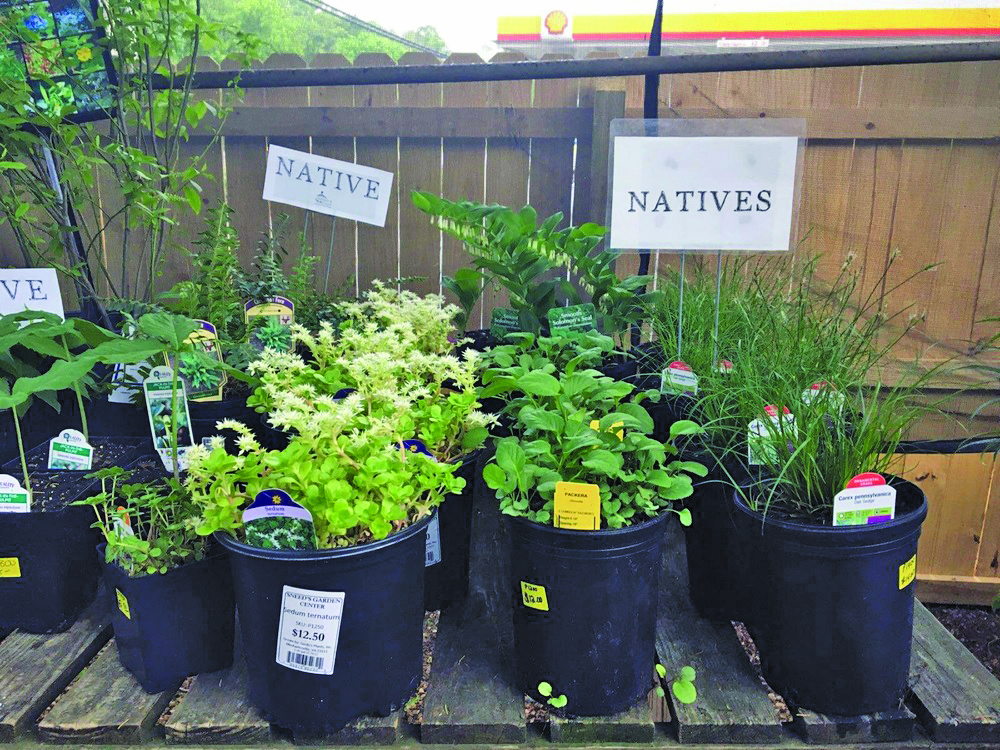
Also presenting at the meeting was Kenny Weakland of Green Planters Nursery and Landscaping, a boutique nursery on Route 17 in Hayes, offering high quality plant materials, mulch, compost, gardening supplies, as well as landscaping services. Weakland has been a leader in the native plant movement and brought a wide array of regionally popular native plants for the group to consider enhancing their gardens to include natives. Milkweed, Cardinal Flower, Asters, Buttonbush, Native Viburnum, Summersweet, Spice Bush, American Beautyberry, and Fringe Tree were among the samples the group explored.

Planters With A Purpose meets the fourth Wednesday of each month, offering regional experts as speakers to continuously improve and sharpen each member’s gardening skills. Contact the Mathews VCE office at 804-725-7196 or by email at r.morris@vt.edu for more information.