
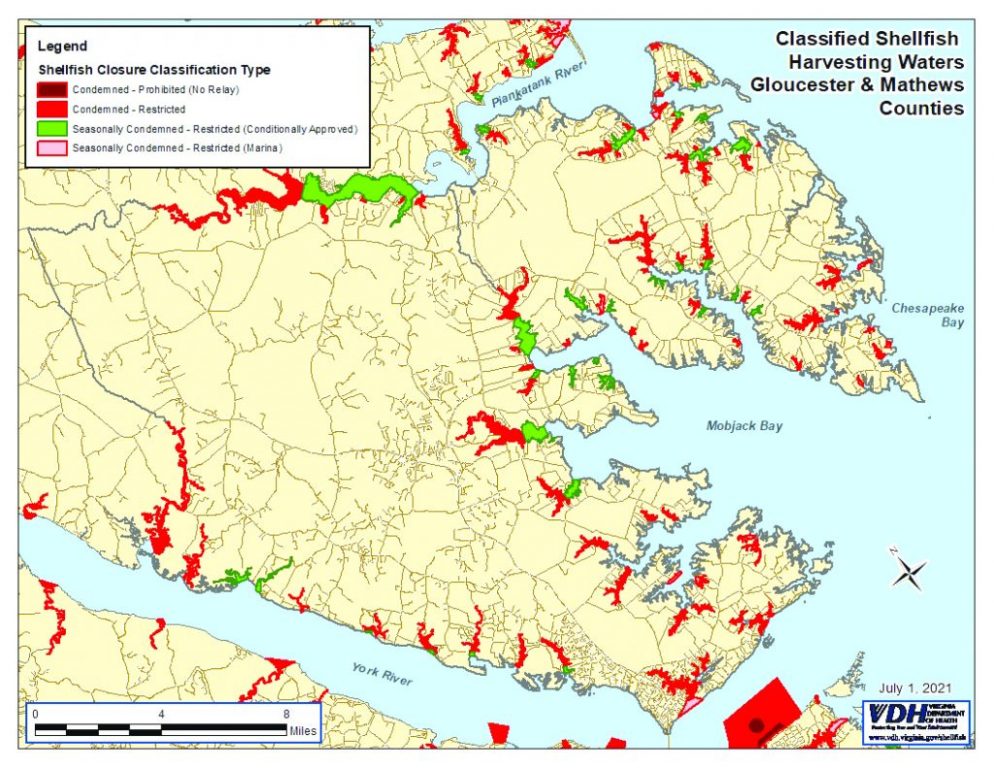
Total acreage in local waterways where shellfish harvesting is not allowed decreased slightly in the past 12 months, from 7,344.7 on July 1, 2020, to 7,219.2 today. Looking back further, the totals were 6,819 in 2019, and 5,714 in 2018. The totals are compiled from records in the state’s Division of Shellfish Safety and Waterborne Hazards, an agency of the Virginia Department of Health. Large areas of the condemned acreage in some of the waterbodies are opened to shellfish harvesting in cooler months. These are marked with an asterisk on the table that accompanies this article. A map showing condemned areas depicts these portions in green. In a few cases, no area of a waterway can be opened to shellfish harvesting; this is a preventive measure taken, usually due to a sewage treatment plant outfall into the water. According to the DSS website, the state evaluates all waterways at least six times a year, under any weather conditions, sampling for concentrations of fecal coliform bacteria...
To view the rest of this article, you must log in. If you do not have an account with us, please subscribe here.