
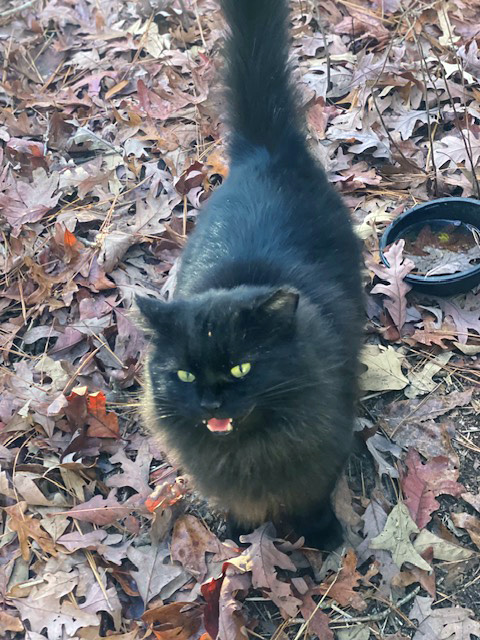
After one year in existence, the Friends of Gloucester Community Cats has hit its stride in providing support for local cat colonies and their caretakers. The group recognizes community cats as those who live outdoors and are not kept as pets.
“We’re defining ‘community cat’ fairly broadly,” said Deborah Butler, co-founder of the group.
Community Cats has amassed over 200 members on Facebook where people can seek help feeding colonies if they fall ill or need to go out of town, advice on how to build proper shelters and assistance with trap, neuter, release or return, and care (TNR-C).
TNR-C is a way to humanely diminish the feline population by trapping feral cats, neutering or spaying the cats, returning the cats to their home and making sure they are cared for with food, water and shelter. This process greatly reduces the numbers of unwanted cats and kittens.
“These animals are getting hurt,” said Katie Evans, co-founder of the group, about stray cats. “These kittens are subjected to awful elements.”
Members of the Community Cats group will train other members on how to trap the cats properly and provide information on next steps.
“We do encourage people to take initiative,” said Butler.
Once trapped, community cats should be taken to a veterinarian to be neutered or spayed. Gloucester-Mathews Humane Society’s Fixin’ to Save Spay & Neuter Clinic, White Marsh Shopping Center, has a feral package where community cats can be fixed for a reduced cost. After surgery, it is recommended that community cats be taken back to where they were found.
One major mission of the Community Cats group is to keep community cats in their neighborhoods and prevent overcrowding at animal shelters.
“It’s much better that they stay where they are,” said Butler.
GMHS and Gloucester County Animal Control will even lend out traps to those seeking to enact the TNR-C process in their own neighborhoods. In regards to spaying and neutering, PETA will come to the area a few times a year to fix community cats.
All of these groups “make it possible to reduce the population humanely,” said Butler.
Those who feed community cats are highly encouraged to go through the TNR-C process, even if there are only a few in the colony.
“You’re going to end up with a lot more cats,” she said.
Since winter is here, the group is pivoting towards helping community cats through the cold months. Ways to help include building warm shelters, providing food in feeders that will stay warm and dry, keeping fresh and unfrozen water available and helping community cats increase their body mass for winter. One way to do this is to provide kitten food, since kitten food is fattening.
“It’s a way to bulk up,” said Butler.
Community Cats is also trying to identify colonies within the county and has found about 48 sites so far. Butler and Evans have divided the county into five general regions on the Facebook group so people can ask for help when they need someone to substitute feed their colony. However, exact locations for colonies are private and only discussed between individuals making feeding arrangements.
This “increases the ability for all of us to work together,” said Butler.
Also in the group, members can share resources, helpful tips, fundraising information and volunteer calls to build shelters and feeders.
“We want to keep advocating for community cats,” said Butler.
“We just need to get more people on board,” said Evans.
The next Friends of Gloucester County Community Cats meeting will be held on Jan. 16 from 6:30-7:45 p.m. at Gloucester County Public Library, Main Street Center. Those interested in helping community cats or simply care about these local feline friends are welcome to attend and/or join the Facebook group.
“We want to keep this an informal network,” said Butler.


