
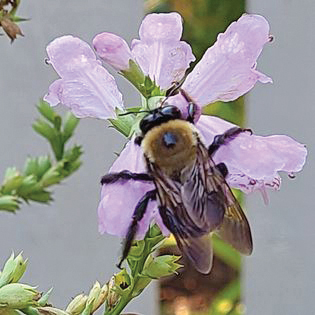
Welcome to August, that liminal time when we have one foot in the light and heat of high summer and the other foot in the cooler, more subdued days of early autumn.
The Sweet Joe-Pye-Weed (Eutrochium purpureum) and boneset (Eupatorium perfoliatum) that I planted last fall have grown tall and strong and are blooming profusely. The three summersweet shrubs (Clethra alnifolia) have been blooming since June, so where are all the bumblebees, carpenter bees, butterflies, flies, moths, and beetles that usually flock to these pollinator-friendly native plants? These insects, hummingbirds, and even bats are the primary pollinators that carry pollen from plant to plant, thus aiding in reproduction.
Even the annual hatching of the black swallowtail caterpillars on the fennel, dill, and parsley has been slow to materialize this year. Fewer than 10 caterpillars have pupated up to this time, although I am happy to report that we currently have approximately 32 caterpillars in various stages of development on the parsley family herbs.
The oft-repeated lament on Facebook this summer is, “Where are my pollinators?” I have added my cry of despair to those of fellow Master Gardeners and members of several online native plant society groups. What is going on
According to the March 2025 results of a study conducted by NatureServe, Nature/Serve Canada, the Xerces Society, and other agencies and educational institutions, we aren’t seeing the usual numbers of pollinating insects because native North American pollinators have declined by more than 22 percent.
Pollinator decline is occurring worldwide, potentially leading to loss of plant biodiversity and reduction of crop yields, thus negatively impacting food security across the globe.
The results of a literature search of peer-reviewed articles on worldwide pollinator decline, conducted by Johanne Brunet and Fabiana P. Fragoso, were published in May 2024. Their literature survey indicated several factors contributing to pollinator loss around the globe, including climate change, habitat loss, pesticide use, pests and pathogens, and pollution. All of these factors are in some way human-induced.
Habitat loss is primarily caused by intensive urbanization and industrialization, including development of huge farm conglomerates. Put simply, pollinating insects have nowhere to build their nests and often lose their food supply, as well. We can help the insects by creating native plant gardens and green spaces in communities and maintaining wild borders around fields and pastures.
Many pesticides, herbicides, fungicides, and fertilizers are lethal to pollinating insects. Direct ingestion or contact with these substances can result in mortality. Less deadly effects include impaired movement, wing paralysis, and adverse metabolic effects. Neonicotinoids and pyrethroids are frequent causes of bee death. Always spray chemicals in the evening when bees are less likely to be active, and follow product instructions for application.
A wide array of viruses, bacteria, fungi, and parasites can quickly spread through and decimate native bee populations. Some species of mites, flies, and moths can parasitize bees, and some bacterial diseases can transmit back and forth between honeybees and native bee species. Beekeepers have a responsibility to minimize transmission of disease as much as possible.
Pollution often involves contamination of soil by heavy metals that may adversely affect the bees’ health. Microorganisms frequently are used to remove heavy metals from the soil (bioremediation).
Artificial light at night (ALAN) impacts nocturnal pollinators like moths and bats, interfering with normal feeding and reproductive behaviors. Motion sensor lighting offers nighttime security without affecting pollinators.
We are not imagining hotter summers and fewer pollinators. Climate change is occurring, and it is the most serious threat to bees and other insects. Increased air and water temperatures can alter flowering time and corresponding seasonal appearance of pollinators. Decreased flower size and numbers, decreased pollen and nectar production, and insect mortality rates are impacted by climate change.
Each of us has a responsibility to minimize damage to the environment by combatting climate change in whatever small ways we can. Work with your neighbors to improve the health of pollinators in your community.

