
Press "Enter" to skip to content

The Thomas family grew and shipped daffodils in Gloucester for decades

(Editor’s note: Bill Thomas of Gloucester wrote this history in 2023 for the Gloucester Daffodil Club.)

I was asked to write a brief history of my family’s involvement with growing daffodils. Sadly for me, the people that I could ask for detailed clarification have all passed. Last year when I received notification that my father had joined the GDC as a lifetime member, I asked him what he remembered most, and boy, was it an education.

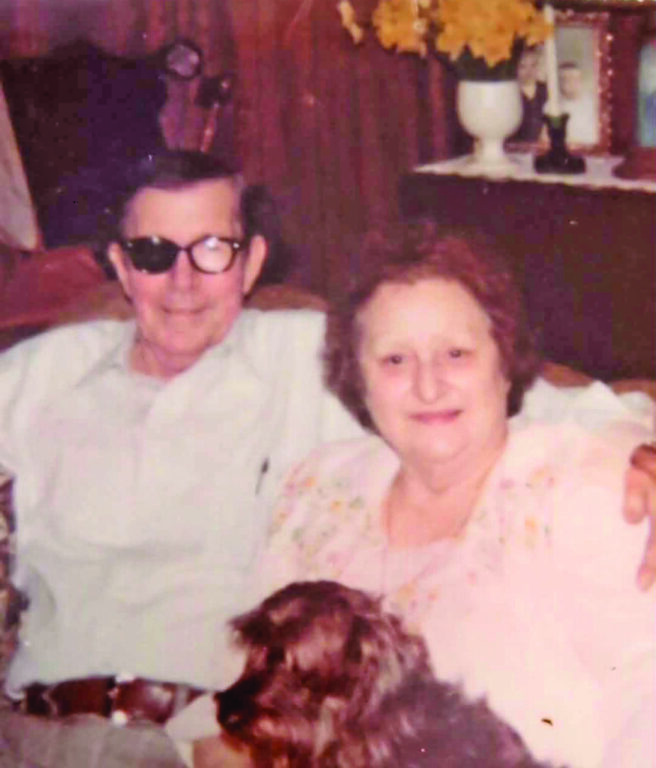
My grandparents, Carroll Douglas Thomas Sr. and Viola Strigle Thomas, had a farm in the Nuttall section of Gloucester. It’s really just a blip on the map, but we sat across the entrances from Elmington, Exchange, and Toddsbury plantations off the North River. The house is still there in between the homes where I grew up and my Thomas cousins.

The daffodil fields were not visible from Route 14 as they were “on top of the Hill” behind us. In the “good old days” (pre-1933 until about 1966) my granddaddy kept 20 acres of six reliable historic cultivars in those fields. My daddy remembered them as King Alfred, Dick Wellband, Helios, Carlton, Mount Hood, and Cheerfulness. I suspect King Alfred was really Dutch Master, but my father was insistent upon calling them King Alfred as did my grand-mum-ma.

Granddaddy also leased another 10 acres in the field in front of Holly Hill and in another field in front of Pig Hill Plantation in Ware Neck. Other growers in the area would also wholesale their entire fields to him for resale in the northern markets to include Baltimore, Philadelphia, and New York City.

Miss Mary Bailey always had a field of Emperors and Empress that for whatever reason peaked at Eastertide. Other local family names Daddy recalled were Heath, Hicks, Mickelborough, Martin, Fields, Hudgins, and Janney.

Dad said that he would often ride with his father to a field in North Carolina and pick flowers all night, even using the headlights from the trucks, to clean the field out before sunrise. Children in Gloucester and Mathews were often let out of school early in the season to pick the bunches of flowers. Most were paid 10 cents a bunch. Women would come to the fields with their babies lying on blankets.

I find it amazing, but this business was all cash. No taxes! Everyone was involved in some way growing daffodils for a cash profit.

In 1938 my family’s trucking business was transporting 120,000 daffodils every day during peak season, from approximately 30 local farms. It was tough hard work from late January until about the first of May, on your hands and knees picking flowers on the damp ground, often in rain and sometimes in snow. Granddaddy said he could deal with rain and snow but the March winds were his worst enemy.

It wasn’t glamorous but it was rewarding work.

My family got out of the flower business in 1966 or thereabouts. Transporting the flowers and even finding labor was not cost-effective.

What happened to our daffodils?  When I was growing up, my Grand-Mum-Ma would take me on long walks in her daffodil fields. She was especially proud of her contribution of one whole acre dedicated to her favorite flower, Dick Wellband. One acre can hold about 228,000 bulbs and at $6 per bulb today (Old House Gardens) I would suspect she wishes we still had them!

The daffodil fields were shared with horses and ponies and encompassed by a humongous electric fence. That fence burned me up more than once!  I was about 8 or 9 when Grand-Mum-Ma came up with a great idea for me to earn pocket money. She still had her old-fashioned tin pails in the tractor shed and one Friday afternoon in early March we took to her fields and she showed me how to pick and rubber band a bunch of flowers. A bunch is supposed to be a dozen but she insisted on 15 because that’s how she did it in the “good old days” and why the florists and wholesalers called upon her first for her flowers. “Always give them more than they expect and include in the bunch an extra three buds if you have them…And for Laws (Lord’s) sake. Don’t tell your granddaddy.”

Grand-Mum-Ma had a very heavy local southern accent. She dressed like Endora from Bewitched, sounded like Scarlet O’Hara, and was absolutely one of the best friends I have ever had!  Anyway, after picking about six pails of daffodils we got them back to the house and they overnighted in the cool dark garage. The next morning she gave me a cardboard sign and we set the pails of daffodils out at the end of her driveway. The sign read 25 cents a bunch.

Villy said “hold up a bunch of fliars (Flowers) in front of this sign and sell ’em all”. She left me alone but I just know she was watching from inside the entire time. By lunch time I was RICH. Rich to a 9-year-old kid in 1975 was about $40 in his pocket. I was hooked and after that my sister would join me.

Yes! They made me make her an equal partner in my newfound business.  My “daffodil money” was spent on luxuries like Puffer Kites and ice cream from Morgan’s Drug Store and popcorn at Old Mill Skating Rink.

My mother and her best friend Betsy Ann Stewart would pick loads of the daffodils for our Church, Salem United Methodist, and nursing homes. After Gram’s death on Mother’s Day 1998 (G-daddy passed too early in 1977)  the land was sold. Homes now stand in the middle of my daffodil field and every once in a while, as I drive through, I can see where a few of my old friends are still blooming in the woods and upon the ditch banks.        

edit daffodil thomas story with tractor when where
FILE PHOTO We don’t have names or a date, but this old photograph shows that daffodil farming was a big business locally in generations past.