
Press "Enter" to skip to content

SAR chapter commemorates Battle of Cricket Hill

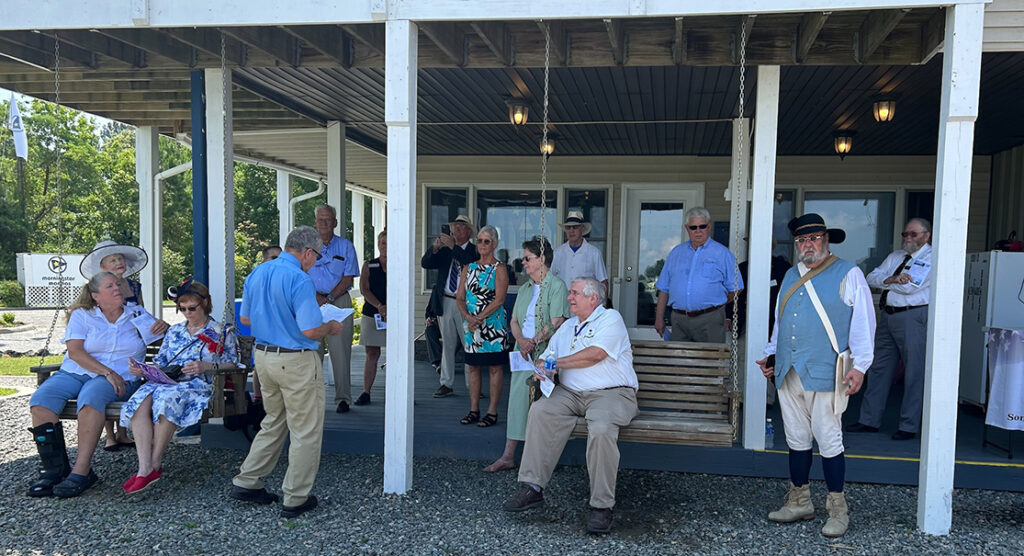
The Richard Henry Lee Chapter of the Virginia Society of the Sons of the American Revolution hosted a celebration of the 248th anniversary of the Battle of Cricket Hill on Tuesday, July 9, in front of the original battle earthworks at Morningstar Marinas in Cricket Hill.

Participating were Virginia Society SAR member and keynote speaker Dr. Patrick Hannum; representatives from the Norfolk, Richard Henry Lee and Thomas Nelson Jr. SAR chapters; Dr. Kenneth Hawkins, governor of the Virginia Society Order of Founders and Patriots of America; representatives of the Augustine Warner, Cobbs Hall and Cricket Hill National Society Daughters of the American Revolution chapters; and Dr. Cheryl Davis, State Librarian of Virginia DAR, and president of the National Society United States Daughters of 1812.

A brief history

Lord Dunmore (John Murray, 4th Earl of Dunmore) was the last Royal Governor of the colony of Virginia. In May 1774, after British Parliament closed Boston Harbor as punishment for the Boston Tea Party and the Virginia House of Burgesses adopted resolutions in support of the Boston colonists, Lord Dunmore dissolved the Virginia assembly.

Virginia colonists revolted and Dunmore was driven out of the Governor’s Palace. He and an entourage of British troops, Loyalists and slaves who were promised freedom for allegiance to Britain engaged in many skirmishes with the patriot Virginia colonists in late 1775 through the spring of 1776 up and down the Virginia coastline.

By June 1776, Lord Dunmore and his troops had sailed on British ships up the Chesapeake Bay and set up a base of operations on Gwynn’s Island.

By July 8, patriot Virginia troops had set up defensive earthworks on the mainland just across the water from Gwynn’s Island. On July 9, patriots under the command of Brigadier General Andrew Lewis opened fire on Dunmore’s fleet with a battery of cannons, including 18- and 9-pounders. Multiple cannonballs pierced the hull of Dunmore’s flagship, wounding Dunmore.

Overnight, the British quietly weighed anchor and fled from Gwynn’s Island. He left behind hundreds of dead and sick slaves who been ravaged by disease including smallpox. Lord Dunmore fled to New York, never to return. This event ended British rule in Virginia, just days after the signing of the Declaration of Independence.

In 2026, the 250th anniversary of this battle will be highlighted as a part of the Mathews 250 celebrations.