
The weather is cooling off and leaves are starting to fall in a cascade of wonderful colors. As you transition into the colder months of the year, now is the time to watch for fall bird migration and to help our feathered friends along wherever they are in their journeys.
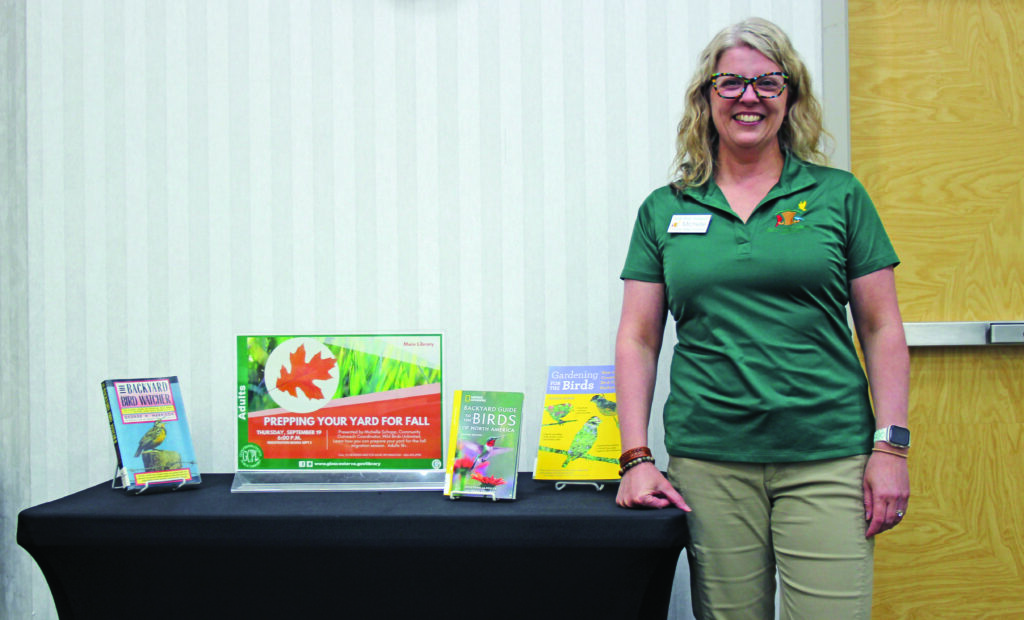
In a presentation at the Gloucester County Public Library, Main Street Center, on Sept. 19, Michelle Schopp, community outreach coordinator for Wild Birds Unlimited, Yorktown, described ways people can prepare their yards for birds who are migrating, as well as those who stick around for the winter.
In first steps, Schopp said people should be able to identify what happens in their yards in the fall, know what birds need in the fall and winter months and create a fall habitat for both migratory and non-migratory birds.
“September’s a really good migration month for our birds,” said Schopp. “The birds migrate primarily during the evening hours.”
One interesting phenomenon that you may observe this time of year is flocks of blackbirds taking part in murmuration, where these flocks travel together and shift as a group to deter predators.
“It’s quite beautiful and fascinating to see,” said Schopp.
This is the only time of year this process occurs. Due to cooperative roosting, “they’re already kind of flocked together to start with,” she said.
Another interesting fact shared by Schopp is that birds will migrate on specific paths year after year.
“There are ways you can check migration,” said Schopp.
BirdCast will show three-day migration forecasts for your location and will even predict the estimated number of birds expected to travel through. The online site will also show the types of birds that are migrating.
“It’s always a fun thing to do this time of year,” said Schopp.
However, there are several birds local to the area that do not migrate.
“A lot of people think goldfinches migrate,” she said.
Due to their coloration dimming during the fall and winter months, many inaccurately believe that goldfinches leave when the weather turns cool. According to Schopp, as long as temperatures stay above zero-degree Fahrenheit, goldfinches will stay.
Since these birds typically do not migrate, they still need a food source. For this reason, Schopp recommends that people wait to cut back their flowers since these granivores are probably feasting on them even if you do not notice these birds, especially on yellow-colored flowers.
“They blend in so closely with those flowers,” said Schopp.
Fall is also the “last push for pollination before the winter comes,” according to Schopp. Goldenrod, which is a late-blooming flower, is important for native bees and other pollinators during this time. Goldenrod is a decongestant, antihistamine and antioxidant, but is often mistaken for ragweed which causes a lot of allergies.
“A lot of people will confuse them,” said Schopp.
Another fall-blooming flower is the aster. If you do not like to plant marigolds, “asters are a great alternative this time of year,” said Schopp.
Creating a habitat for birds regardless if they are staying put or on the move this fall is important to keeping these creatures happy and fed through the colder months.
“Leave your leaves” is strongly encouraged, said Schopp. Small critters and insects will use the warmth of the leaf litter to live through the winter. Birds will hunt for these insects to keep themselves fed when other natural food sources are scarce during the cold months of the year.
In addition to being good for the birds, fallen leaves also provide moisture, create a mulching barrier for lawns and put nutrients back into your yard during decomposition. A lot of chrysalises will also drop into the leaf litter from oak trees with residents emerging in the spring.
“Not all butterflies emerge right away,” said Schopp.
Providing shelters for birds in the wintertime is also important so they can take cover from the elements and escape from larger predators. This can be as simple as creating a brush pile from natural items in your own yard, “upcycling the ‘trash’ in our yards to make it useful to our critters,” said Schopp.
This is a great time of year to clean out your bird houses, but make sure to leave them up for smaller birds to take shelter in. “I say, keep your bird houses up all year round,” said Schopp.
Adding more feeders to your yard instead of taking them down will also help both migratory birds and those staying put. Since natural food sources dwindle during the colder months, birds are more reliant on the food humans provide for them.
Schopp said this is a great time of year to try hand-feeding birds since they will let down their defenses in exchange for a meal.
“They’re just looking for any food,” said Schopp.
Hand-feeding can be a great experience. “It will change your whole perspective about birds,” said Schopp.
Birds need food that is high in protein, fats and carbohydrates. Berries, peanuts and mealworms are all great for birds.
A lot of birds will take any food they can find and store it in small crevices during October and November to “make sure they have a bounty for winter,” she said.
Fall is also molting season for birds and they need a lot of food to help that process along. “Molting requires a lot of energy,” said Schopp.
Making sure to provide clean, fresh water daily is also key to our feathered friends’ survival during this time. Water is not only needed for hydration, but also to bathe. Birds become easy targets when they cannot fly correctly and this is often caused by dirty wings.
“Smaller birds are intimidated by deep water,” said Schopp. Placing sticks or stones in your bird bath gives smaller birds something to perch on and will allow them to properly use the water provided.
Providing food and water now will encourage migratory birds to come back to your yard on their return trip in the spring, especially hummingbirds.
“They have really good memories,” said Schopp.
Other tips Schopp provided include turning out unnecessary light in the evening and nighttime hours as to not confuse migrating birds and knowing when migration is happening in your area.
“Be a good bird neighbor,” said Schopp.

