
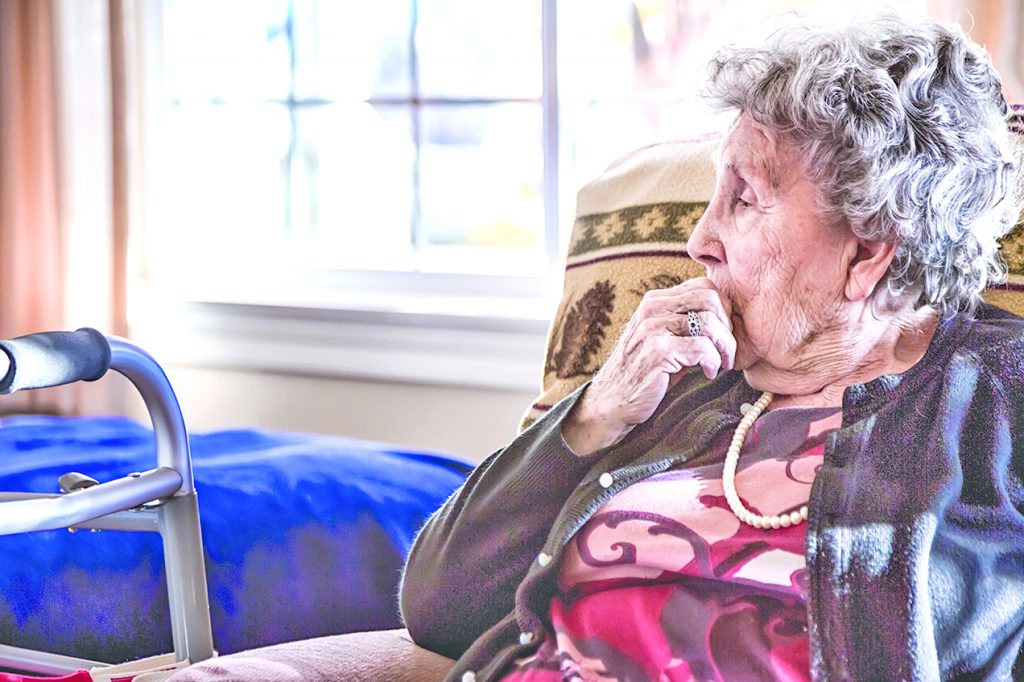
Almost a year after the World Health Organization declared COVID-19 a global pandemic, many continue to struggle with the devastating effects of a health crisis still out of control.
Older adults have faced added challenges of loneliness and even depression as they are strongly recommended to keep self-isolating for their own health and safety by numerous agencies including the Centers for Disease Control and Prevention and the Virginia Department of Health.
There are many programs in Gloucester and Mathews counties and beyond that have been designed to help older adults experiencing loneliness and depression while they remain in self-isolation.
One service that both counties can access is Meals on Wheels. According to Kathy Vesley, President and CEO of Bay Aging, Meals on Wheels programs help to prevent loneliness in both clients and volunteers.
Meals on Wheels volunteers interact with their clients by delivering meals, visiting clients “on the porch” and checking in with clients on their needs. Many volunteers will run errands, like picking up a prescription, for their clients.
“It’s the real human versus the virtual,” said Vesley.
Vesley said that this is also a good program for those who are also self-isolating and lonely to volunteer in. Those who wish to volunteer must be over the age of 16. She said that this is the program where Bay Aging receives the most positive feedback.
Bay Aging also has a lot of virtual resources for older adults self-isolating at home. It can work with patients being released from the hospital through telehealth, discuss discharge instructions and do training on chronic disease management with patients remotely. Bay Aging also posts videos on meditation, yoga and promoting good health on its website. Bay Aging also has a COVID-19 self-evaluation tool on its website which also helps steer people in the direction of healthy behavior.
Though there are multiple virtual resources available for those who are self-isolating, there are many who do not have access to online content. Vesley said that her biggest concern is for those who do not have the broadband or technology to access the online content provided.
Another way Bay Aging is connecting with those in isolation is by telephone checking. Vesley said staff is getting to know these older adults in self-isolation through active listening sessions so that they can stay engaged in life. Seniors can also be assigned “a talking buddy” who is also in self-isolation.
Vesley also said that its adult day care has been growing in Gloucester. One challenge with that is keeping everyone socially distanced but they do get to have some interaction time with real people.
Another service that Bay Aging is offering is its “Good to Go” campaign. Bay Transit has made numerous changes to make riding a safe experience in the age of COVID-19. There is plexiglass between each seat and no passenger is seated beside another. Masks, hand sanitizer and gloves are available for any passenger who may need them. Bay Transit also cleans its buses regularly. This is all so that riders can feel safe going out.
CARES Act funding of $53,872 provided expanded fixed-route services. Extended hours of service are from 8 a.m. until 4 p.m. Monday through Friday for the Courthouse Circulator and Hive Express routes. Gloucester County ridership is up by 48 percent.
Vesley said that there are things that family members of older adults in isolation can do to help with loneliness. Family can make sure to call regularly and engage them by talking about their interests. She also said that drive-by and porch visits are good for face-to-face time. She said that it is easy to become depressed in self-isolation.
Vesley said that Bay Aging has a wonderful group of volunteers in all of its counties.
Mathews Social Services
Mathews Social Services, located on Church Street, also offers services to older adults in self-isolation.
Older adults in self-isolation who meet eligibility requirements can access companion care. Companion care services can include light housekeeping, grocery shopping trips and having contact with another person. Each individual receiving the care determines if someone can come inside the home to provide a service.
According to Tiffany Gordon, Director of Mathews Social Services, and Jill Coffey, Family Services Specialist, one challenge older adults are facing in isolation is deterioration of their mental health. Many people in self-isolation due to the pandemic have experienced increased depression and anxiety.
Before COVID-19, many older adults liked to have in-home counseling sessions. Mathews Social Services has a mental health grant that can help sessions take place in a counseling office if seniors do not feel comfortable with somebody in their home due to the spread of COVID-19.
Gordon and Coffey commented that many older adults have been worried about going to their doctor or even the emergency room especially at the beginning of the pandemic. Some older adults have been reluctant to go out and get important prescriptions like heart and blood pressure medications.
People in the community can help those in self-isolation by supporting Hands Across Mathews and Meals on Wheels. Gordon and Coffey said that Meals on Wheels drivers are the only people some older adults may see all day.
Older adults in self-isolation should stay in contact with their families as much as possible and reach out to their church communities to help them through isolation. Older adults should also seek help when needed.

