
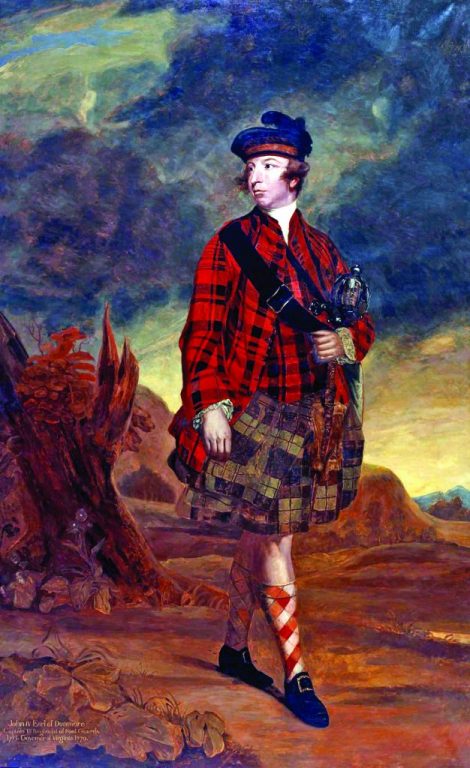
While much of the focus on the Revolutionary War deals with the Declaration of Independence, the battle of Bunker Hill, Washington crossing the Delaware River, Valley Forge and Yorktown, the area comprising Gloucester and Mathews counties also saw significant action.
Two pivotal moments in the American Revolution history took place right here. The first—which marked the end of British rule on Virginia soil—took place in and around Gwynn’s Island some 245 years ago.
The second—the largest cavalry battles to place during the war—was fought at Hayes, with that battle’s 240th anniversary coming up this fall.
In the conflict’s early days, the Battle of Cricket Hill, July 8-10, 1776, drove Lord Dunmore, the last English governor, from Virginia. At the end of the war, on Oct. 3, 1781, the American victory at the Battle of the Hook prevented British troops from reinforcing their embattled comrades in Yorktown, eventually leading to the surrender of Lord Cornwallis and his besieged troops.
Sara E. Lewis of Williamsburg has extracted from ancient files of that city’s Virginia Gazette an account of the Battle of Gwynn’s Island, which took place 245 years ago this weekend. She found the detailed report in the Virginia Gazette of July 20, 1776, bringing news of that victory to one of the birthplaces of American democracy. At that time, Gwynn’s Island was still part of Gloucester County.

A statue of General Andrew Lewis stands in his hometown of Salem.
From the Virginia Gazette
Williamsburg, July 20, 1776
Extract from an officer’s Journal, who was at the late cannonade at Gwyn’s Island.
On Monday the 8th instant, about 7 o’clock in the evening, Gen. Lewis arrived at Gwyn’s Island, attended by Colonels Woodford, Stephen, Buckner, and Weedon. That night a battery of eighteen pounders was opened against the enemy’s fleet, which consisted of the Roebuck, Fowey, Otter, Dunmore, several tenders, and upwards of 60 other vessels of various sorts.
At 8 o’clock next morning the General announced his orders for attacking the enemy’s fleet and camp, but putting a match to the first gun himself, which was pointed at the Dunmore, then lying nearest our battery; this shot passed through her. Our lower battery, of four guns, nines and sixes, commanded by Lieutenant Denny, had orders to direct its fire partly at the shipping, and partly at the enemy’s camp and battery on the opposite side of the haven.
The Dunmore stood our fire about a quarter of an hour, in which time, however, she fired but five guns, and then slipped her cables and hauled out. She did not, however, get out of our reach before she received ten shots from the batteries, three of which raked her fore and aft. The second shot from our eighteen pounders killed the boatswain, and wounded two others mortally. Lord Dunmore was wounded in the leg by a splinter, occasioned by a nine pound shot from Denny’s battery.
The Otter laid her broadside to us, when according to a former promise from Capt. Squire, we expected she would at least have given us some rounds; but receiving _ between wind and water, she seemed glad to get away on the , without firing a gun. By this time the whole fleet was in , many vessels slipped their cables to get out of the way of our eighteen pounders. The enemy’s battery was also soon silenced, and their thrown into confusion from the cannon directed to play on them.
About half after nine the fire ceased, and about twelve was renewed with vigour. We should have attempted a landing upon the island during the cannonade, but had not vessels to cross the haven. This night the General ordered all the canoes in the different creeks on our side [of] the haven to be collected in order to cross next morning. Early in the morning of the 10th, we observed the enemy’s fleet under way, except three tenders which lay in the haven to prevent our crossing. These it was necessary to take or remove. They had, the preceding night, thrown out their ballast in order to get out at the lower end of the island, if obliged to fly; but, as it was low water when we attacked them, which we did with two brass six pounders, which were admirably served by Capt. Harrison, they could not effect their purpose.
The Lady Charlotte, a sloop, mounting six carriage guns, we first attacked. She lay about 300 yards from the shore, and kept up a very brisk fire upon us, till at Last she got aground. Capt. Smith’s company was ordered to board her in canoes, but before then could reach her the crew quitted in their boat. Captain Smith passed by the sloop, with great spirit pursued their boats, and __ up with part of the crew before they could clear themselves of a long point on which they landed; some he took, but the commander of the tender, who was wounded in the thigh and had one arm broken, made his escape.
A schooner, carrying six swivels, two carriage guns, and a co-horn, was abandoned during the engagement with the sloop, as was also a large pilot boat, which fell into our hands.
Two hundred men were immediately ordered to land on the island, under the command of Col. McClanahan; but this took up so much time in our small vessels that the enemy had an opportunity of retreating to their ships; still, however, in so precipitate a manner, that they left behind one of their cannon, several of their sick, and a great part of their effects.
A number of Negroes, cattle, horses, and furniture has fallen into our hands. The deplorable situation of the miserable wretches left behind is beyond description. The flight of the fleet was so sudden that they left anchors and cables to the amount of 1000 or 1500.
On the 11th I reconnoitered the island, and was at the wrecks of three vessels which they burnt in their confusion; as also of two row gallies. It is suppose they buried 500 Negroes whilst on the island, which was only seven weeks. During the firing on the enemy’s camp, two markees were knocked down. In this assault both officers and men of the regulars, minute battalion, and militia behaved with great spirit and activity.
If the small-pox and putrid fever had not raged on the island, boats would have been provided in time; and there is no doubt, from what I saw of the officers and men, that they would have landed and taken almost every man and every thing belonging to the enemy on the island; but, as we must have run a great risk of taking the infection of the terrible disorders, it was not judged prudent to do any thing more than to drive off the enemy, and confine them to their ships. The large ship which they burnt was not the Dunmore. It is said, that another was sunk at the mouth of Rappahannock.
Many poor Negroes were found on the island dying of the putrid fever; others dead in the open fields; a child was found sucking at the breast of its dead mother. In one place you might see a poor wretch half dead making signs for water, in another, others endeavauring to crawl away from the intolerable stench of dead bodies lying by their sides; in short it was a shocking scene. Dunmore’s neglect of those poor creatures, suffering numbers of them to perish for want of common necessaries and the least assistance, one would think enough to discourage others from joining him.
The fleet went off in a sad plight, and must be at a great loss where to go to, for they lay at anchor in Potowmack river 16 hours, with a fair wind up the river or the bay. They could not return to Norfolk, as the harbor there is well fortified.

