
The home is the safest place to be for those looking to avoid the current pandemic, especially to senior members of the community. Though the world is opening back up, the threat of COVID-19 has yet to go away. The elderly population is at a higher risk of being severely affected by the virus.
Home Instead Senior Care has been serving the Middle Peninsula for 12 years, providing nonmedical in-home care for the elderly. Stephanie Derry, Client Care Manager for HISC, said that it’s not impossible for anyone to go right now, but seniors may need to go out with added caution.
Seniors may want to limit their trips to help limit their chances of exposures. Going out to get the essentials from grocery stores should be a top priority for most. Derry said that seniors should try to find the down times (less busy) of their local markets. Some stores are open for strictly elderly hours, but she worries that bringing in all the high-risk people into one building at one time could be dangerous.
Some members of this high-risk age group are still active, and maintain an active social life. Some keep themselves busy by going to gyms or music events. For others, their outings come on Sunday mornings when they go to church. Closures have put a halt to many of the outlets people have to socialize.
Derry said that trying to remain social is important, but knowing how high-risk certain settings are is equally important. Events where people sweat, sing or speak in front of crowds have a high risk of virus droplets being spread. She suggests trying to take the fun and socialization to them, if possible, to mitigate the risk.
Socialization is important for mental wellness, which Derry said can be overlooked at times. She said that being miserable and feeling alone is unhealthy for anyone, not just the older population. She said that a mental low can lead to poor nutrition and other health risks.
Community members also have a role to play when it comes to the care of neighboring seniors, said Derry. Just going out to get groceries and medication can be a concern for some seniors these days. She recommends that young people in the community help their older neighbors simply by running errands for them.
One obstacle Derry said some faced was finding the line between working in the public and helping their elders. Derry said those worried about exposing their elders need to make sure they feel clean and safe. If one feels it necessary, they may want to wear a mask to protect their loved ones.
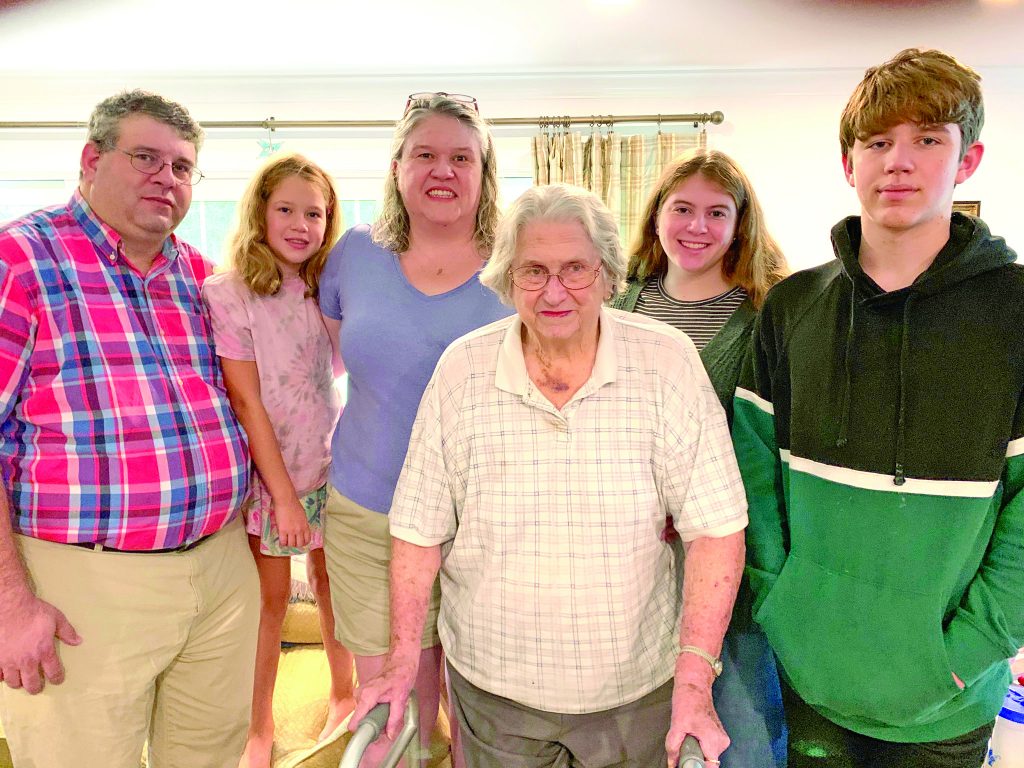
Though not a client of Home Instead, Katherine Small of Mathews and her family understand the risk of exposure very well. Small lives in a household with her husband, three children, and her 88-year-old mother. She said that her family has made social distancing a top priority. “We follow all of the CDC guidelines,” said Small who’s been fortunate to be able to work full-time from home. Her husband Craig, however, has to split his time from home, and in the office. They take the necessary precautions to ensure their household members stay as safe as possible.
Small said that they’ve limited their exposures to others to help keep each other safe. She said that her mother, Joice, has high-risk health factors that make COVID-19 incredibly dangerous.
Everyone has done their part to protect each other, which includes making sacrifices. Small said that they have had to turn down certain opportunities for their children because of health risks. For example, they decided to opt out of travel ball for their son Soles, a rising freshman at Mathews High School.
Their daughter Joice is also an athlete, and a rising junior at MHS. According to Small, her daughter was never at home before the pandemic because of all the sports she involved in. All of her kids have had to find new ways to occupy their time and stay social, while remaining isolated.
Small said that they’ve spent far more time with each other these last few months, and have found activities and exercises to keep them from being bored. Small said that her family has yet to resume going to church. They’ve been able to watch their services online, and participate in an online Sunday school class. The class gives them a means to socialize with people outside of work, and their home. They also have more family in the area that is also remaining isolated, and are able to safely spend time with them. Other visitors have had to remain outside, or masked when coming by their home.
The Small family, like most, goes out when needed to get groceries and run errands. Derry said that seniors and their families that are limiting their trips out should make sure that they’re prepared for hurricane season while they’re out and about. Everyone needs to be ready to evacuate, or shelter themselves, and the elderly may not have the ability to go to stores at the last minute and fight for batteries, she said.
Family members of seniors should be prepared in case they need to leave. Some have bedridden elders that can’t be relocated with ease, and should be aware of any proactive choices they may need to make before a storm makes landfall. Everyone needs to have a plan and supplies to be prepared for the worst.
Derry understands that not everyone has the ability to constantly care for their elders, because of distance or work. Agencies such as Home Instead offer nonmedical services to help care for those who struggle to care for themselves.

