
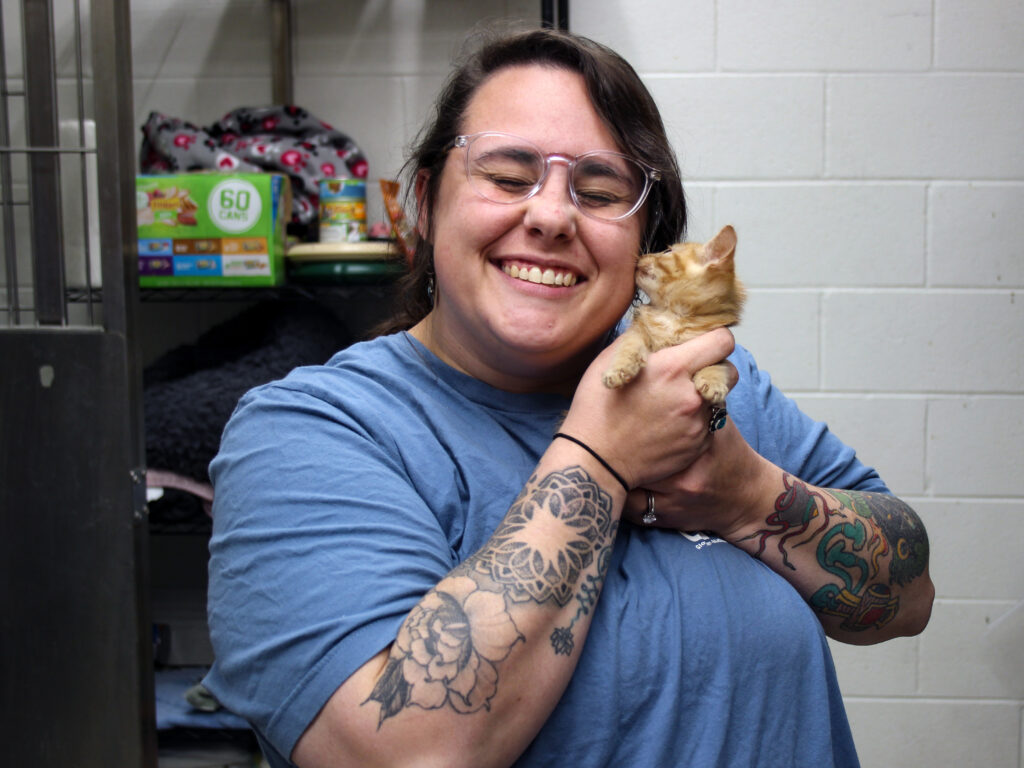
“I’ve been fostering for 10 years now.”
Earlier this summer, Chrissie Norman accepted the role of foster care coordinator at the Gloucester-Mathews Humane Society. Though she is new to the area, she has been working in animal welfare since graduating from Virginia Commonwealth University in December 2015.
“I never really looked back,” said Norman.
She started her animal welfare career with the Richmond SPCA as part of its admissions team. In this role, she would transport animals to her shelter from other shelters facing capacity issues, limited resources and emergency situations.
Since then, she has worked for different rescue organizations, municipal shelters and was even once employed as an animal control officer in Richmond.
“I’ve done a little bit of everything,” said Norman.
Her passion for fostering animals began while she was employed at the Richmond SPCA. Norman started fostering young kittens who needed to be bottle-fed in her home.“One of my cats now was one of my first bottle babies,” said Norman. “Now, he’s been my baby for 10 years.”
The number one need for shelters during kitten season, which is currently ongoing, is foster home individuals who are willing to bottle-feed young kittens.
“It is a huge time commitment,” said Norman.
Kittens with no mother need to be bottle-fed every two to three hours for the first four to four-and-a-half weeks of their lives. The kittens will then start their transition to solid food by eating a combination of kitten milk replacer and wet food.
Since not everyone is cut out for fostering bottle babies for the full four weeks, people can also volunteer to be respite care for the small kittens when their regular foster families need a break.
“It’s all hands on deck during kitten season,” said Norman.
During kitten season, the shelter cannot take in all of the area kittens. Fosters are needed to take care of the kittens until they are healthy and old enough for adoption.
“Our fosters have been absolutely phenomenal,” said Norman. “They are the true heroes of kitten season.”
Kittens will come to GMHS sick and in need of special attention, love and care, but will leave their foster homes surviving and thriving.
“Our fosters make it happen,” said Norman.
Though GMHS does not have the space for all of the kittens brought in, the shelter is available to provide resources, supplies, information, medication and more to foster families.
“We’re there every step of the way,” she said.
Kitten season began this year in March and is still ongoing. Since cats breed in warm weather, kitten season is not expected to end until October this year.
“It is a group effort,” said Norman. “It’s seemingly never-ending this season.”
Though kitten season can cause a strain, the work is rewarding for both GMHS and the fosters.
“The cuteness never wears off,” said Norman.
Kitten season can be challenging for fosters from the time dedication to the stress of caring for an animal who comes to them sick. However, GMHS fosters have faithfully taken on litter after litter throughout the season.
“They just continue to open their hearts and homes to them,” she said.
Dogs
“We have fabulous dogs here,” said Norman.
New at GMHS is its foster-to-adopt program for dogs. This way, prospective adopters can try out a new dog in their home, typically for two weeks, to make sure the animal is a good fit for their family and lifestyle. Fostering to adopt can also be a great way for adopters to make sure that their current animals will accept the new animal.
“People really have been taking advantage of it,” said Norman. “I think people have been really thrilled to give it a try.”
Those not looking to adopt a new animal can also just simply foster dogs to give them a break from the stress and noise of kennel life.
“It’s just great to see them get out of here for a little while,” said Norman.
Sometimes, however, people fall in love with the dog they have been fostering and decide to adopt the animal after all.
“We do have that happen pretty often,” said Norman.
Fostering
Those interested in fostering can fill out an application on the GMHS website, located under the “Get Involved” tab. Applicants will answer questions such as the lifestyle of their home and which animals and life stages they are interested in fostering.
“Those come directly to me,” said Norman.
The shelter’s greatest fostering need right now is for kittens who need to be bottle fed.
“We have a handful of bottle baby fosters, but they fill up quick,” said Norman.
After this kitten season is over, Norman is planning to hold a bottle-feeding workshop to “help people be a little more comfortable and confident” for next kitten season.

