
More than 60 years since it was introduced to Virginia waters, the invasive blue catfish population is thriving and only growing.
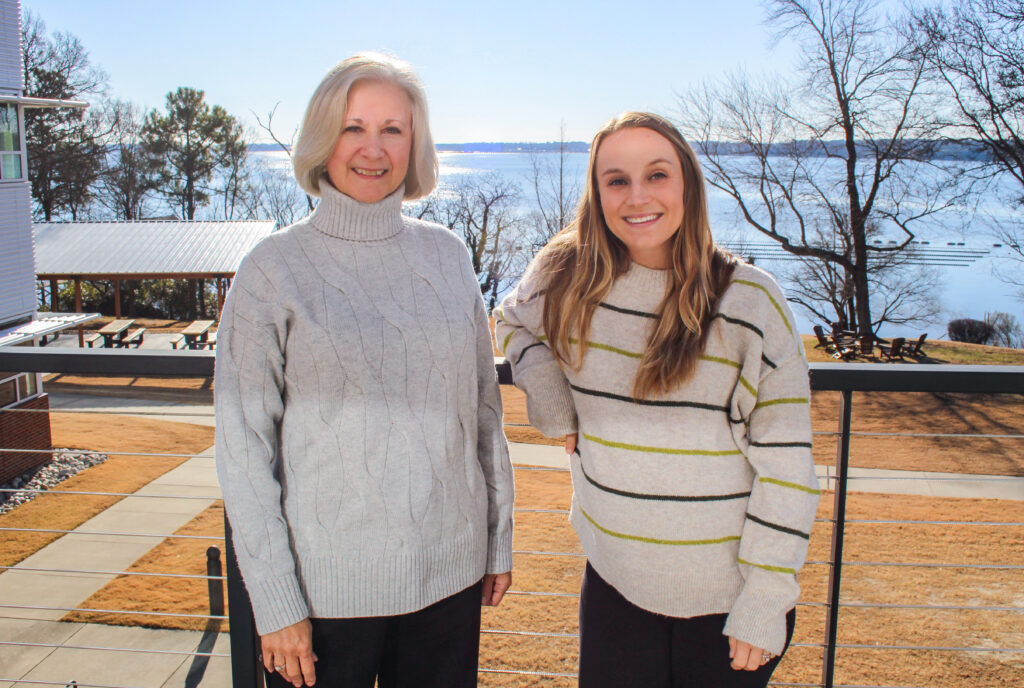
“They introduced blue catfish in the James and York,” said Mary Fabrizio, a professor at the College of William & Mary’s Batten School & Virginia Institute of Marine Science.
The blue catfish was brought to Virginia in the 1960s and ’70s for recreational fishing. “Catfish are really popular among anglers,” said Fabrizio.
Though blue catfish are typically a freshwater fish, the species soon crept into more brackish waters. “They’re just a good, hardy species,” said Shelby White, marine business specialist with the VIMS Marine Advisory Program.
“These catfish are very adaptable,” said Fabrizio.
Today, there are laws and regulations in place to prevent people from introducing non-native species in new territories and across state lines.
“Back then, that was pretty common,” she said. “People were moving fish all over the place. Now, we pay attention to those things.”
The blue catfish population has increased in abundance over the past two decades, especially in the James River. However, they are not typically observed in the Virginia part of the Chesapeake Bay.
“Generally, we don’t see them in the bay,” said White.
The same cannot be said for Maryland, which is trying to control the recent influx of blue catfish to its part of the bay.
The blue catfish population has become dominant for a multitude of reasons.
“They get large,” said Fabrizio. “They live a long time. They eat anything.”
Blue catfish have been observed to live upwards of 25 years and are eating species that people typically enjoy.
“They eat blue crabs year-round,” she said. “They’re removing a lot of blue crabs.”
The issue has become so exacerbated that researchers are concerned about the survival of juvenile blue crabs.
Another reason why blue catfish have excelled is the parental support the young receive. According to Fabrizio, male blue catfish will guard the eggs and nests until they are ready to hatch.
The longevity of these fish also poses a problem for population control. “They’re reproducing for a long time,” remarked Fabrizio.
Blue catfish also do not have to eat a lot to survive or reproduce and can withstand longer periods without food.
“They’re also in North Carolina now,” said Fabrizio.
“They’re certainly moving,” said White, “as far down south as Wilmington, North Carolina.”
With the blue catfish’s presence, native populations are struggling. “Other species aren’t growing,” said White.
There is no simple answer available to fix the overpopulation of blue catfish in Virginia.
“It’s hard to say what the solution is,” she said.
Researchers have looked into removing large groups of blue catfish, but that process would come with several problems.
“That level of harvest is extremely high,” said Fabrizio. “It’s a really high-level extraction.”
Even if a great number of the population were removed, this would not fix the problem as more food would become available to those that remain.
“Then you release the others from competition because there’s enough food,” said Fabrizio. This could cause the population to rebound.
Another idea is to create a commercial fishery around blue catfish and get them on more consumer plates. However, blue catfish tend to not be as profitable to fishermen as other species.
For now, researchers and state and federal agencies are working together to help keep the problem at bay.
“Everyone is at the table,” said Fabrizio.

