
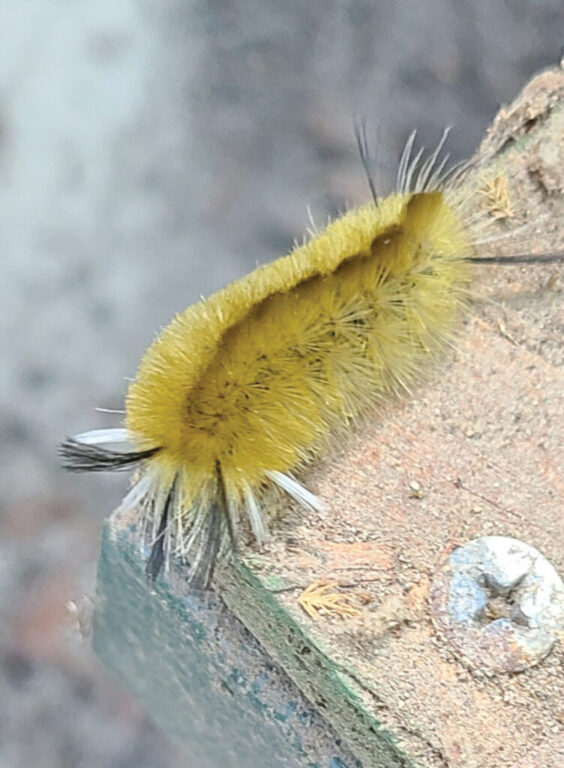
Some of you may be thinking right now, “Oh no, she really is going to write about more stinging caterpillars this week. I hoped she would forget.” I didn’t forget, and even though caterpillars, stinging or otherwise, aren’t everyone’s favorite reading topic, it is important to learn something about their place in the food chain and the role that adult moths play in pollination. Stinging caterpillars don’t seek out humans to terrorize them; the toxic spines and hairs are their means of protection against all potential predators. Several years ago, a Facebook friend posted a photo of a Monarch caterpillar (Danaus plexippus) munching on a leaf. Next to the Monarch was a slightly blurred orange and black caterpillar with fuzzy white ponytails. My friend’s comment was, “They’re growing!” I thought, “Well, they may be growing, but what are they?” I remembered that the Monarch’s appearance doesn’t change appreciably as it molts, so, what was this unusual caterpillar? Jim and I walked up to th...
To view the rest of this article, you must log in. If you do not have an account with us, please subscribe here.