
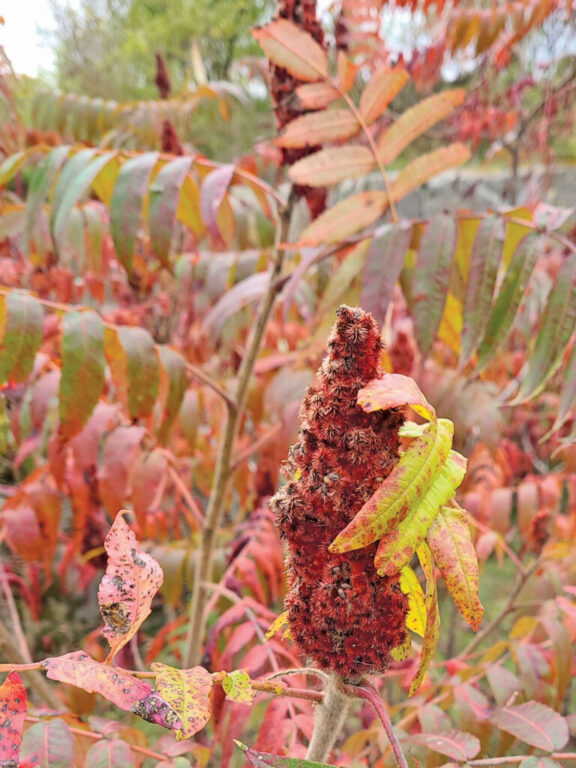
Jim and I spent last week at a lovely farm inn outside Staunton. The inn complex was built around the oldest log cabin (circa 1795) on the property. The views from our second-story suite included rolling acres of green grass dotted with sheep and Angus cattle, the perfect spot to relax away from the intrusion of the noisy outside world. We spent one afternoon on the Blue Ridge Parkway, where we saw that some of the hardwoods were beginning to put on their fall show. Along the roadside, we noted large banks of staghorn sumacs bearing deep crimson cones at the branch tips. I found a photo of staghorn sumac that I took in October 2024 in upstate New York; fall color change is evident. A few days ago, Jim sent me a YouTube video about how staghorn sumac had been transported from its native home in eastern North America in the 17th century to find a spot first in English gardens, then had spread to Europe, the Mediterranean, and the Middle East, where the cones became a staple in flavoring ...
To view the rest of this article, you must log in. If you do not have an account with us, please subscribe here.