
Press "Enter" to skip to content

One Gloucester family’s story from enslavement to achievement

In Gloucester County, one family’s story stretches from enslavement and the Civil War to civil rights activism, education reform, entrepreneurship, and migration across North America.

The story begins during the Civil War.

Two brothers, James Carter and Andrew Carter, were enslaved at Shelly in White Marsh, near Gloucester. When Union forces at Fort Monroe began accepting formerly enslaved people seeking refuge, the brothers escaped across the water and enlisted in the United States Colored Troops.

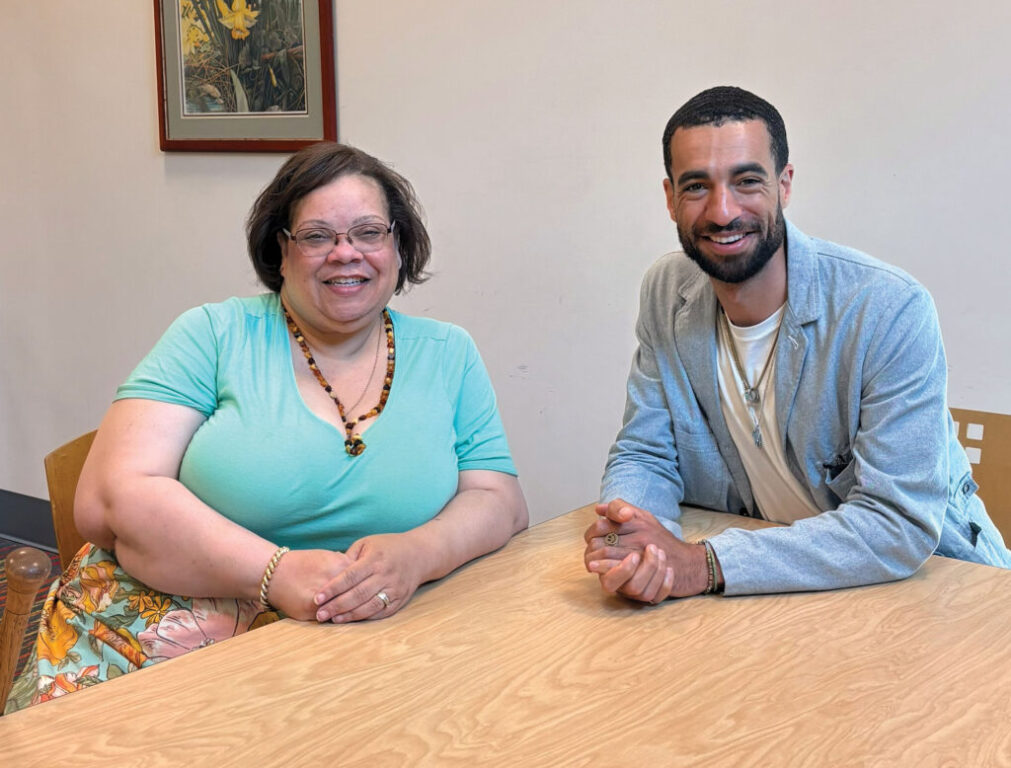
“They stole themselves,” Dianne Carter de Mayo, a direct relative, explained.

The brothers fought for the Union Army throughout the South, eventually serving as far away as Florida. Family memory holds that when Confederate forces surrendered at Appomattox Court House in 1865, Union soldiers in Florida celebrated by firing cannons. One of the brothers reportedly stood too close to the blast and suffered a permanent hearing injury, later receiving a Union pension for his military service.

But another branch of the family’s Civil War story unfolded in a more complicated way.

Gabriel Carter was initially taken into Confederate service by the Page family, who had enslaved him. Yet family history shows that Gabriel eventually gained enough freedom of movement to travel independently throughout Gloucester County, fishing and harvesting oysters from local waterways.

Officially, he sold food to nearby plantations. However, according to descendants, he helped supply food across the river to Union troops.

“He got paid in gold,” Carter de Mayo recalled.

After the war, Gabriel reportedly used that money to purchase the plantation where he had once been enslaved.

Following emancipation, the family turned toward land ownership and institution building.

Gabriel’s son, James, became a farmer in Shelly and helped establish an early black lending cooperative named the Gloucester Building and Loan Association. The organization loaned money to black residents so they could purchase farmland and homes during the late 19th and early 20th centuries.

According to family accounts, by the 1910 and 1920 census periods, black landownership in Gloucester County exceeded that of white owner-operated farms in some areas. Unlike neighboring counties where sharecropping trapped families in debt, Gloucester developed a sizable black landowning class.

“There was very little sharecropping here,” Carter de Mayo explained. “Land is the only thing they’re not making any more of” is something Carter de Mayo’s great-grandfather would say, urging black residents to purchase land.

The association reportedly issued loans at 6 percent interest because “it was simple enough to calculate in your head,” Carter de Mayo said.

During the Great Depression, when banks across the country collapsed, the Carter family said the organization remained stable, giving black residents continued access to credit at a time when many Americans lost everything.

Yet descendants stress that this success was never the result of one person acting alone. The lending association involved partnerships among several prominent black families in Gloucester, including the Walkers, Prices and Carters. The family specifically points to the overlooked labor of women, especially a matriarch named Sarah, who managed records and bookkeeping operations that held the organization together.

In public memory, however, much of the recognition went elsewhere.

One of the most prominent historical figures connected to this story was T.C. Walker, Gloucester’s influential black attorney, educator and political leader. Walker’s name appears on schools and historical markers throughout the county, and his autobiography presents him as a singular architect of black advancement in the region.

But Sam Carter-Shamai, a direct family member, argues the fuller story is more collaborative.

“What you see in official history is often the story of the ‘great man,’” Carter-Shamai said. “But great men never act alone.”

Instead, cousins Carter de Mayo and Carter-Shamai describe a deeply interconnected black community whose success depended on a collective effort from the community.

George Nelson Sr. helped establish Gloucester’s NAACP chapter in the 1940s as black residents challenged unequal school conditions under segregation.

At the time, Virginia operated under the doctrine of “separate but equal,” established by the Supreme Court’s 1896 decision in Plessy v. Ferguson. In practice, black schools throughout the South often suffered from severe neglect.

Carter de Mayo described dangerous conditions in Gloucester’s black schools, including contaminated water supplies and inadequate facilities, recalling exhibits at Bethel Church documenting how students attended schools with unsanitary conditions while white schools received greater investment.

The local NAACP filed lawsuits demanding that Black schools receive genuinely equal resources.

Those legal efforts contributed to the construction of T.C. Walker School.

Archival records and oral histories occasionally differ on exactly who pushed hardest for educational reform and who received public credit afterward.

Carter-Shamai, an urban planner and historian of the family’s migration patterns, has spent years comparing oral histories with official archives, dissertations and records.

“What I realized,” Carter-Shamai explained, “is that institutions preserve one lens of history. They preserve property records, crime records, military records, the stories of important men. But family archives preserve something else.”

One uncle who remained in Gloucester spent years writing a family memoir tracing their history to Gabriel and the Civil War. Another relative, who eventually migrated from Virginia to Philadelphia, Pittsburgh, New Haven, the Canadian Arctic, and finally Toronto, Canada, unknowingly created a second archive through decades of letters mailed home to friends and relatives.

After his death, friends returned those letters to the family.

Together, the documents reveal two parallel stories, one of a man who stayed rooted in Gloucester County, and another of a man who carried Gloucester’s history across North America.

The family’s history illustrates how oral storytelling itself becomes a form of historical preservation.

Many details survive not through official records but through conversations around kitchen tables, handwritten memoirs, and intergenerational memory. Descendants now see preserving those stories as an act of historical recovery.
Carter-Shamai said he is concerned with recovering the contributions of black women whose labor often disappeared from formal archives.

“We’ve shifted from the story of one man’s singular genius,” Carter-Shamai explained, “to a story about community effort held together by the intelligence and labor of black women.”

Carter de Mayo and Carter-Shamai’s ancestors fought for the Union while another ancestor maneuvered within Confederate structures. They built financial institutions in an era designed to deny black wealth. They challenged segregated schools while navigating rivalries within black leadership itself.

And throughout it all, they documented their own lives when official institutions either ignored them or reduced them to partial truths.

Carter-Shamai works to “hold institutional archives and community memory together.”

That process reveals the gaps between public history and lived experience.

Oftentimes, black communities appear only briefly during slavery, the Civil War, or the civil rights movement before disappearing again from the narrative. But local oral histories tell a different story, one of continuous labor, organizing and adaptation across generations.

From self-emancipated soldiers crossing the river to Fort Monroe, to black farmers lending money during the Depression, to civil rights organizers demanding equal schools, to descendants piecing together archives across continents, their history traces a long struggle for land, education, and belonging.