
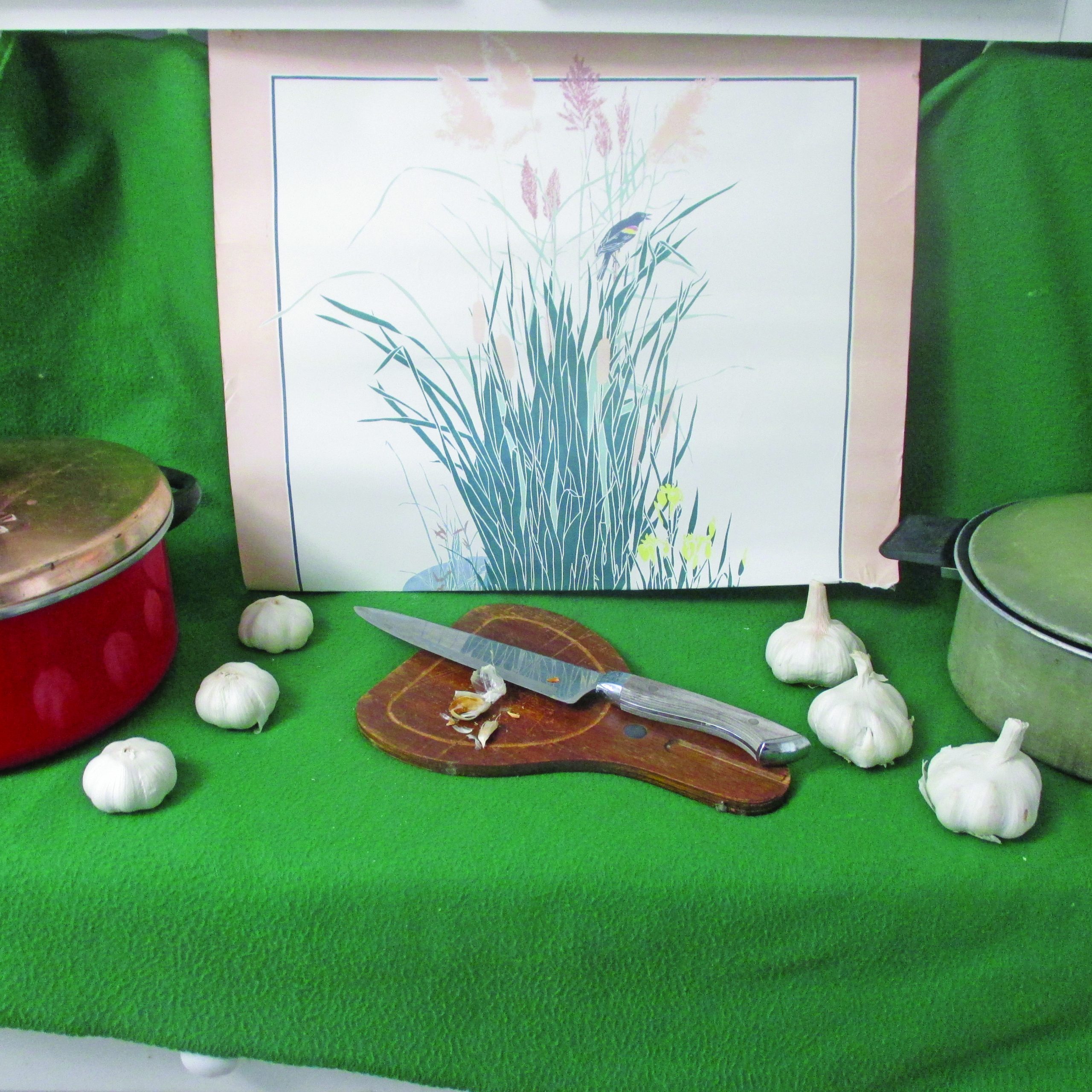
April is National Garlic Month. This revered bulb has been an offering to the gods and despised as a substance to be fed to pigs. For centuries it has been used as food, money, medicine and an aphrodisiac. This pungent herb is one of the oldest cultivated plants and there are over 2.5 million acres in garlic cultivation and is in season year-round. It originated in ancient times in the Mediterranean or farther east.
In the 17th century a few varieties of garlic came to North America with the first Polish, German and Italian settlers. A close cousin of garlic has grown in North America for hundreds of years. Native Americans used this plant as an addition to drinks and as medicine.
In England garlic breath was deemed entirely unsuitable for refined young ladies and the gentlemen who wished to court them. Americans adopted this attitude and didn’t embrace garlic until the 1940s. It was given to soldiers in WWII as medicine.
In a turn to the favorable side, garlic consumption in this country has tripled since 1990. It is claimed that garlic is one of the most healthful foods on earth.
You need to know how to prepare garlic properly to obtain its flavors and intensity though there is no single correct cooking method; it depends on the dish you’re cooking. Garlic cloves can be baked, boiled, chopped coarsely or finely, mashed with a garlic press or given a mortar and pestle going-over. Experiment and do what works best for you.
Whether dried or fresh, garlic cloves must shed its papery skin, unless the bulbs are being baked.
Equivalents, measures, and servings
1 small clove = ½ tsp. minced = 1/8 tsp. garlic powder
1 large clove = 1½ tsp. minced = ½ tsp. garlic powder
1 head (also called a knob) = 8 to 15 cloves
References: “A Brief History of Garlic,” “Learn About Garlic History,” “Origin and History of Garlic” and “Garlic: A Brief History.”
GARLIC PREPARATION TIPS
Prepping garlic is the first step in cooking with this aromatic bulb.
- Do not burn garlic. It burns easily, in a few seconds at medium or high heat. Many recipes call for garlic to be added to hot oil. Do not let it cook in hot oil for more than a few seconds before adding other ingredients. Safer still is adding the garlic after the liquid ingredients.
- Wait 10 seconds after dicing, crushing or chopping the garlic before you add it to an acidic-based foods or liquids. It’s a good policy to add garlic at the end.
- Garlic can be smoked. This method was first used to preserve it. But it’s another way to experience the deliciousness of garlic.
SUGGESTIONS FOR SERVING - Add garlic to sauces, soups, stews, and casseroles.
- Insert thin slivers of garlic (called “larding”) and sprigs of fresh herbs directly into meat or under the skin of poultry to be roasted.
- Top your favorite pizza with very thin slices of garlic. Add garlic to your favorite pesto, marinade, and salsa recipes.
- Pickle whole garlic cloves in soy sauce or vinegar.
- Add finely chopped garlic and fresh herbs to ground beef for out-of-this-world hamburgers, meat loaf, and meatballs.
- Sprinkle vegetables that will be oven-roasted, like potatoes, sweet potatoes, turnips, onions, and carrots, with a combination of olive oil, chopped garlic, fresh herbs, and salt and pepper.
- Make garlic bread. Toast slices of French baguette or Italian bread in an oven broiler, toaster oven, or regular oven, then rub freshly cut cloves of garlic over the bread.
- Make aïoli, a garlic mayonnaise. Delicious with vegetables, salads, meats, or anywhere a light, creamy garlic flavor is desired.
GARLIC-LEMON SHRIMP
2 Tbs. olive oil
1 lb. uncooked shrimp, peeled and deveined
3 garlic cloves, thinly sliced
1 Tbs. lemon juice
1 tsp. ground cumin
¼ tsp. salt
2 Tbs. minced fresh parsley
Hot cooked pasta or rice
In a large cast-iron or other heavy skillet, heat oil over medium-high; sauté shrimp 3 minutes. Add garlic, lemon juice, cumin and salt; cook and stir until shrimp turn pink, 2-3 minutes. Stir in parsley. Serve with pasta.
POTATOES WITH RED PEPPER AND WHOLE GARLIC CLOVES
2 Tbs. olive oil
12 garlic cloves, peeled
2 lb. potatoes, cut into ¼- to ½-inch cubes
1 tsp. salt
½ tsp. pepper
1 large sweet red pepper, cut into ½-inch pieces
In a large heavy skillet, heat oil over medium-low. Add garlic cloves; cook, uncovered, until almost tender, about 10 minutes, stirring occasionally. Increase heat to medium. Stir in potatoes, salt and pepper. Cook uncovered for about 15 minutes, stirring occasionally. Add red pepper; cook and stir until potatoes are tender, approximately 10 minutes.
CREAMY GARLIC CHICKEN
4 boneless, skinless chicken breasts
¼ c. all-purpose flour
½ tsp. garlic powder
¼ tsp. freshly ground black pepper
1½ tsp. kosher salt, divided
¼ c. extra-virgin olive oil
4 Tbs. unsalted butter
1 head garlic, cloves separated, peeled, lightly smashed
½ c. dry white wine
1¼ c. chicken stock
1 c. heavy cream
½ c. Parmesan, finely grated
Chopped fresh parsley, for garnish
Slice each chicken breast in half horizontally. In a shallow bowl, combine flour, garlic powder, pepper, and ½ tsp. salt. Toss chicken in flour mixture until well coated. In a large skillet over medium-high, heat oil and butter until butter melts. Shake off excess flour from chicken, then arrange half of chicken in pan in an even layer. Fry chicken, turning until lightly golden brown on both sides and cooked through. Transfer to a plate. Repeat with remaining chicken. Reduce heat to medium. Cook garlic, stirring often, until softened and golden brown, about 2 minutes. Deglaze pan with wine, scraping up any stuck-on bits. Pour in stock and cream; season with remaining 1 tsp. salt. Simmer, stirring occasionally, until sauce is thickened, 8 to 10 minutes. Stir in Parmesan and nestle chicken back into sauce. Simmer until chicken is heated through. Top with parsley when served.

