
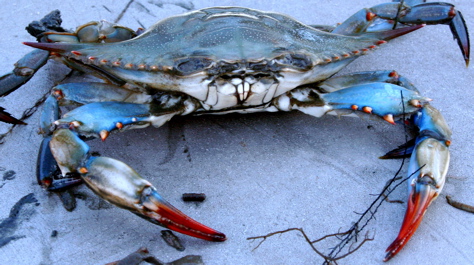
Results from the latest Blue Crab Winter Dredge Survey indicate the female spawning stock in the Chesapeake Bay remains healthy, but a low abundance of juvenile crabs may mean a lean harvest this fall. Historically, one year of below-average recruitment does not necessarily indicate the population is declining, but Chesapeake Bay managers will be keeping a close eye on these juveniles and their recruitment into the blue crab fishery this fall. The survey has been conducted annually since 1990 by the Virginia Institute of Marine Science and Maryland Department of Natural Resources. Survey scientists employ traditional crab dredges to sample blue crabs at 1,500 sites throughout the Chesapeake Bay from December through March. By sampling during winter when blue crabs are buried in the mud and sedentary, scientists can develop, with good precision, estimates of the number of crabs present in the Chesapeake Bay. “The low numbers of juvenile crabs captured in the survey are driving the reduc...
To view the rest of this article, you must log in. If you do not have an account with us, please subscribe here.