
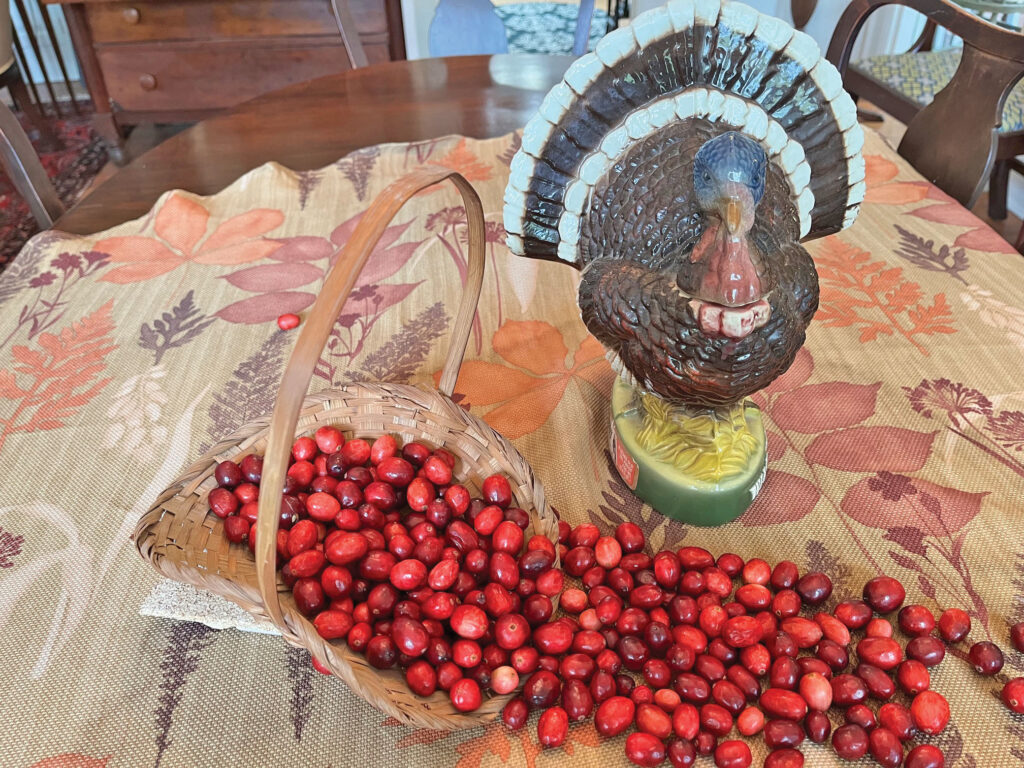
That beautiful red berry known as cranberry has been around for a long time and has an even longer history. The Wampanoag across southern Massachusetts enjoyed the annual harvest of sasumuneash (wild cranberries) for 12,000 years. They ate berries fresh, dried them to make nasampe (grits and bread) or pemmican—a mix of berries, animal fat and dried meats. Considered a very healthful dish, the cranberry could last for months. Medicine men or powwows used cranberries in traditional healing rituals to fight fever, swelling and even seasickness. The 16th and 17th century English settlers in New England were not surprised to find sasumuneash. They knew about European cranberries which grew in the boggy areas of southern England and the low-lying Netherlands. They gave the name cranberry to their new-found fruit because the flower resembled the head of a Sandhill crane. So successful was the cultivation and growing of cranberries that by 1816 the first commercial cultivation began in Massach...
To view the rest of this article, you must log in. If you do not have an account with us, please subscribe here.